PEM 3D Printing
Paste extrusion in a polyurethane multi-component process: a large-format printer that turns almost any granulate into solid or elastic parts using two-component polyurethane binders.
Large Format Straight From the Nozzle — Cured in Seconds
Conventional additive processes hit their limits at large scale: too slow, too finely resolved, too expensive in material. The idea behind PEM was therefore a radical change of feedstock — away from filament, towards any granulate with grain sizes of up to 2.0 mm.
Our company acted as the central source of ideas, initiator and driving force behind the entire solution. Through targeted technological optimisation, the polyurethane multi-component process was lifted to a new level of performance and efficiency.
Inside the machine, the granulate is mixed with a two-component polyurethane binder and extruded as a paste. The pot life is under ten seconds, so each bead is practically self-supporting from the moment it is laid down. Depending on the mixing ratio and material, parts cure either elastic or rigid, and overhangs of up to 45 degrees are possible without support structures.
A Printer That Produces Furniture-Sized Parts
The goal was a machine that produces large-format objects in hours rather than days. With a build volume of 2,200 × 2,200 × 2,000 mm, print speeds of up to 300 mm/s and a throughput of up to 100 g/s at layer heights between 3 and 12 mm, exactly that was achieved.
Material freedom mattered just as much: because the process runs on granulate instead of speciality filament, recycled materials such as EPDM can be processed too. That opens up applications from street furniture and playground equipment all the way to parts printed under water.
The Result in Pictures
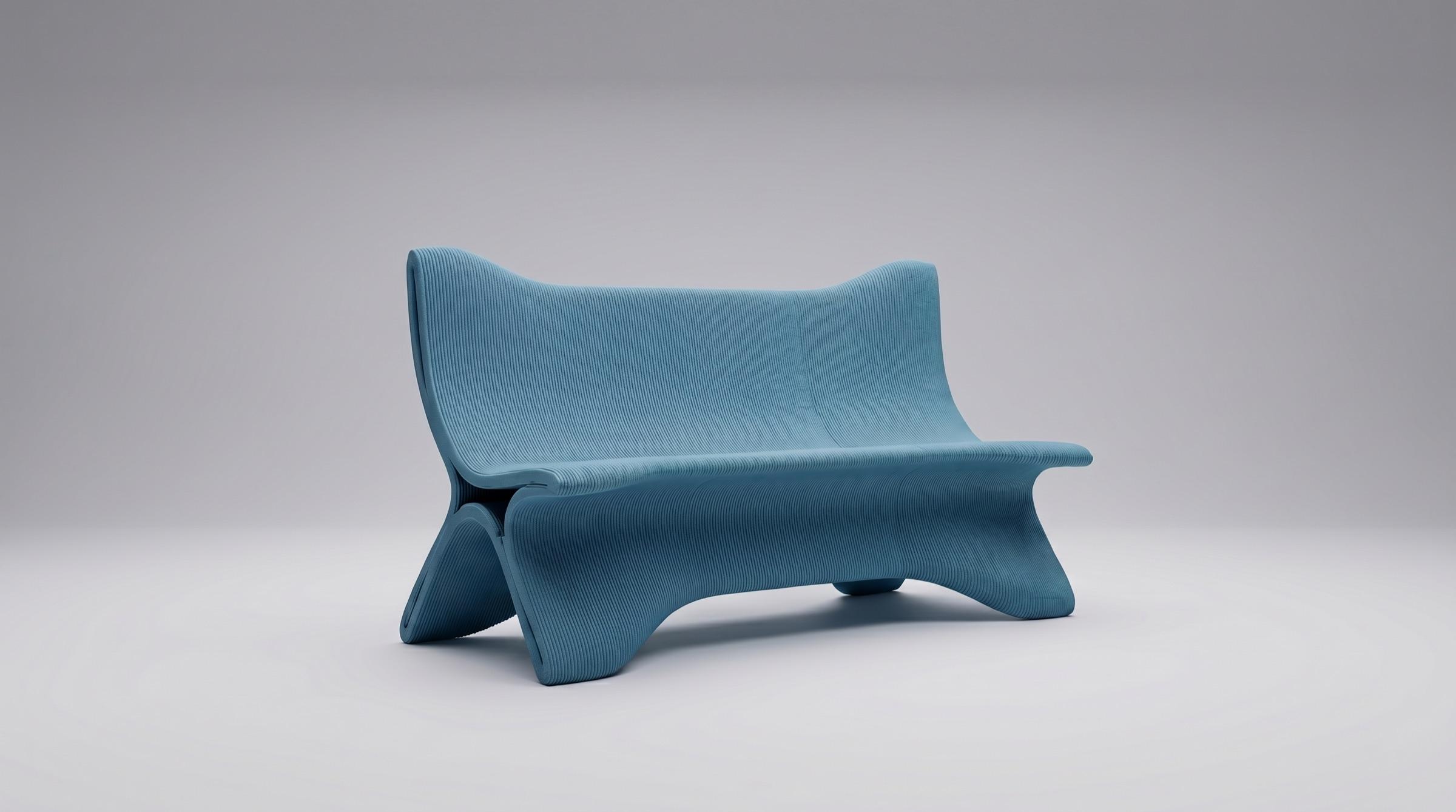
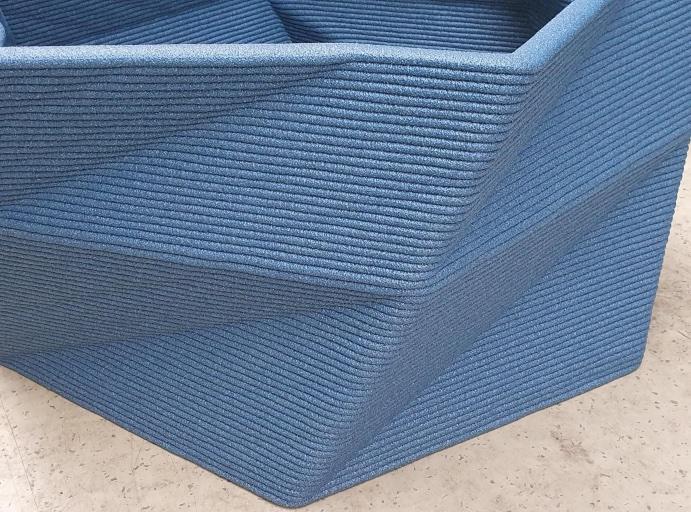
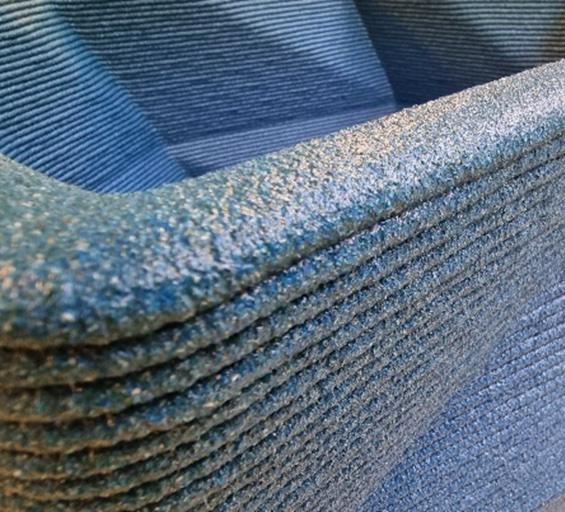
The process stays visible in the part itself: the extruded beads as a design feature, the open granulate structure along the edges — and a seating element that came out of the nozzle in a single piece.